The Challenge
The first signs that something was breaking down for DTI weren’t dramatic. They showed up in small, repeated frustrations that added up quickly.
Project updates arrived constantly through WhatsApp. Photos, redlines, daily reports, and as-built documentation were scattered across chat threads, emails, and shared folders. To understand the status of a single project, teams had to download files, reorganize information, and reconstruct documentation before any review could even begin.
As Pablo Rancier, Project Manager at DTI, described it, “Everything was coming in through WhatsApp. Photos, redlines, reports. We had to download everything, organize it, and piece it all together. It was a lot of work with too many moving parts.”
As project volume increased, the inefficiencies became impossible to ignore. Communication multiplied, manual effort ballooned, and consistency across projects became harder to maintain. What worked when workloads were lighter simply didn’t scale as DTI took on more simultaneous builds.
The Solution
DTI realized the problem wasn’t effort or experience. It was a lack of structure.
They needed a single platform that could replace fragmented workflows, centralize documentation, and introduce clearer control across daily operations without slowing teams down. They chose Vitruvi.
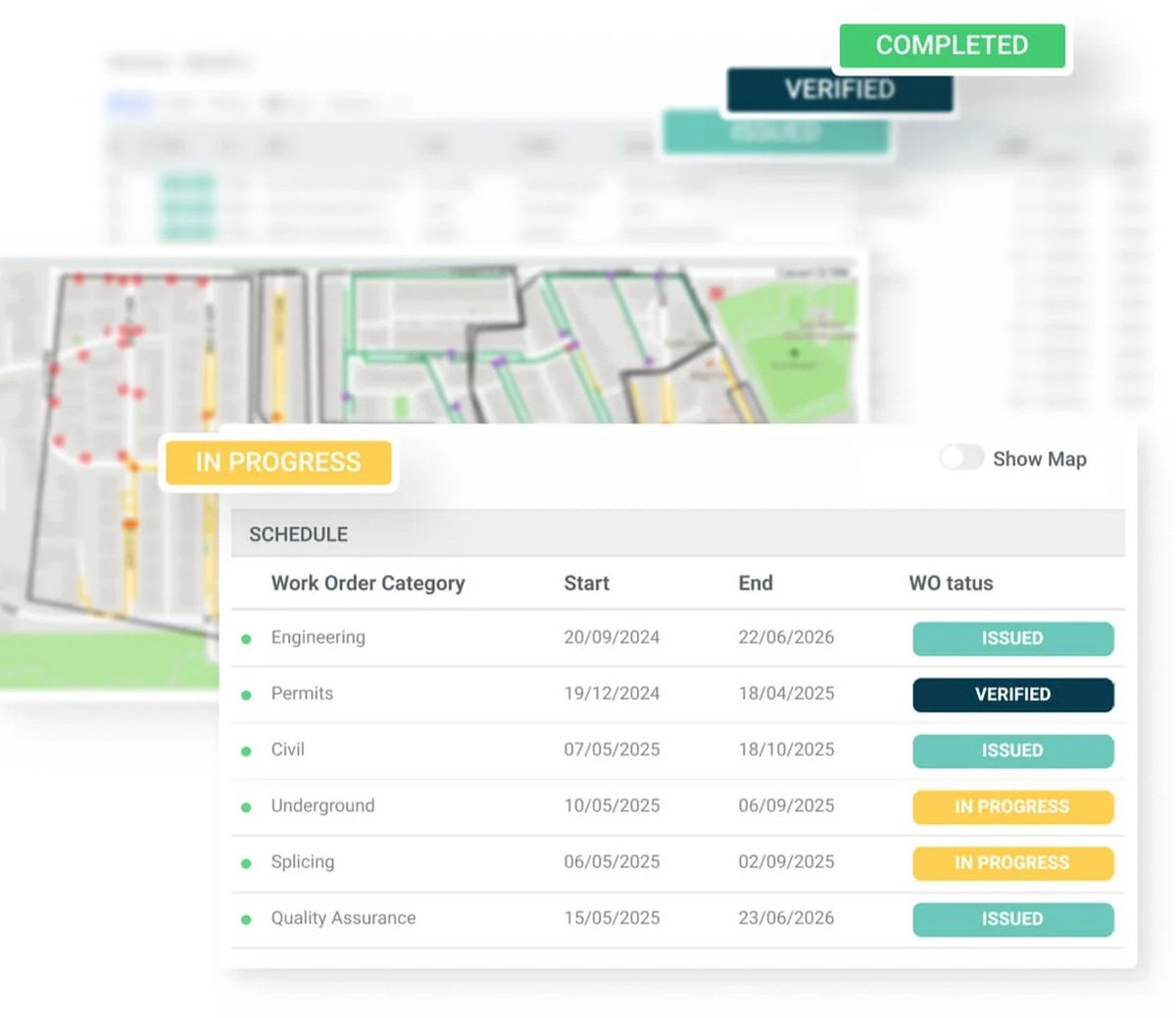
By consolidating work orders, documentation, approvals, and field submissions into a single system of record, Vitruvi replaced ad hoc coordination with a consistent, repeatable process. Subcontractors submitted dailies directly into the platform, giving supervisors a clear mechanism to review, approve, or reject work without endless back-and-forth.
For Lawrence Zajkowski, Supervisor at DTI, that change brought immediate relief. “It is nice that I can just reject a daily and put the reason right in why. Whereas before, I used to have to go through WhatsApp and argue, and now once it’s rejected, it’s done.”
Instead of negotiating issues across chat threads, expectations became clearer, decisions were documented, and work progressed more quickly.
The Results
Once Vitruvi was embedded in day-to-day operations, the impact became evident quickly.
Instead of pulling information from multiple systems, teams now manage everything in one place. Documentation is reviewed, annotated, approved, or rejected directly in the platform, reducing administrative effort and eliminating unnecessary rework.
“Now everything happens in Vitruvi. We review it there, approve or reject it there, and add notes in one place instead of pulling data from multiple systems,” explained Rancier.
The time savings were tangible. Tasks that previously consumed an entire workday were dramatically reduced, freeing teams to focus on execution rather than paperwork.
“What used to take a full day now takes about a third of the time. Everything is already there. We just verify it, approve it, and submit it,” Rancier added.
Those operational gains carried through to the financial side of the business as well. Faster documentation turnaround enabled invoices to be generated sooner, thereby tightening payment cycles for both DTI and its vendors.
As Ozzy Ramos, Third-Party Administrator at DTI, noted, “We’re starting to see payment cycles shrink. Instead of two weeks, it’s getting closer to a week. That gap is narrowing.”
With full utilization already in place across construction projects and a mandate for 100 percent subcontractor adoption in 2026, Vitruvi has become a foundational platform supporting DTI’s growth, operational consistency, and financial performance.
“It’s a great platform for construction and broadband teams to streamline workflows, documentation, and invoicing,” Ramos said.